Brain Training: What Actually Works and What Is Just a Game
15 June 2026 · By Brain.mu · Updated 5 July 2026

The pitch is irresistible: play fun puzzles for ten minutes a day and your memory, focus and processing speed will improve across your whole life. Brain training is a large global industry built on that promise. The science behind it is far more modest, and understanding why tells you a lot about how to actually invest in your mind.
The transfer problem
Here is the core finding, repeated across many studies: practising a brain training game makes you better at that game, and at very similar tasks, but the improvement mostly stays there. Get faster at a number-matching puzzle and you become impressively fast at number-matching puzzles. Your ability to remember where you parked, follow a complex meeting or manage household finances typically does not budge.
Researchers call this the transfer problem. Near transfer, improvement on closely related tasks, is real but narrow. Far transfer, improvement in general everyday cognition, is what the marketing implies and what the evidence largely fails to support. Several major reviews and expert consensus statements have reached this sober conclusion, and at least one prominent app company has been penalised in the past for overstating its claims.
This does not make the games worthless. They are harmless fun, and for someone who would otherwise be passively scrolling, a puzzle is a better default. Just be clear about what you are buying: entertainment with a light cognitive flavour, not a workout with guaranteed carryover.
What real training looks like
So what does improve general cognition? The consistent answer is activities that are novel, progressively challenging, and complex enough to engage many systems at once. The brain adapts to genuine demands, and everyday life supplies richer demands than any app.
Activities with encouraging evidence or strong theoretical grounding include:
- Learning a new language, which loads memory, attention and sound processing simultaneously, and in multilingual Mauritius there is always another language to improve, from Mandarin to Hindi to sharpening your written French or English.
- Learning a musical instrument, one of the most demanding coordination and memory tasks a human can attempt at any age.
- Complex games against humans, such as chess, bridge or dominoes at the shop corner, which add strategy, memory and social reading.
- Skilled hobbies with a learning curve: sewing patterns, woodworking, model building, coding, cooking unfamiliar cuisines from scratch.
The common thread is the struggle. If an activity has become comfortable and automatic, its training effect has largely been collected. The benefit lives at the edge of your ability, where you make errors and correct them.
The multiplier most people ignore
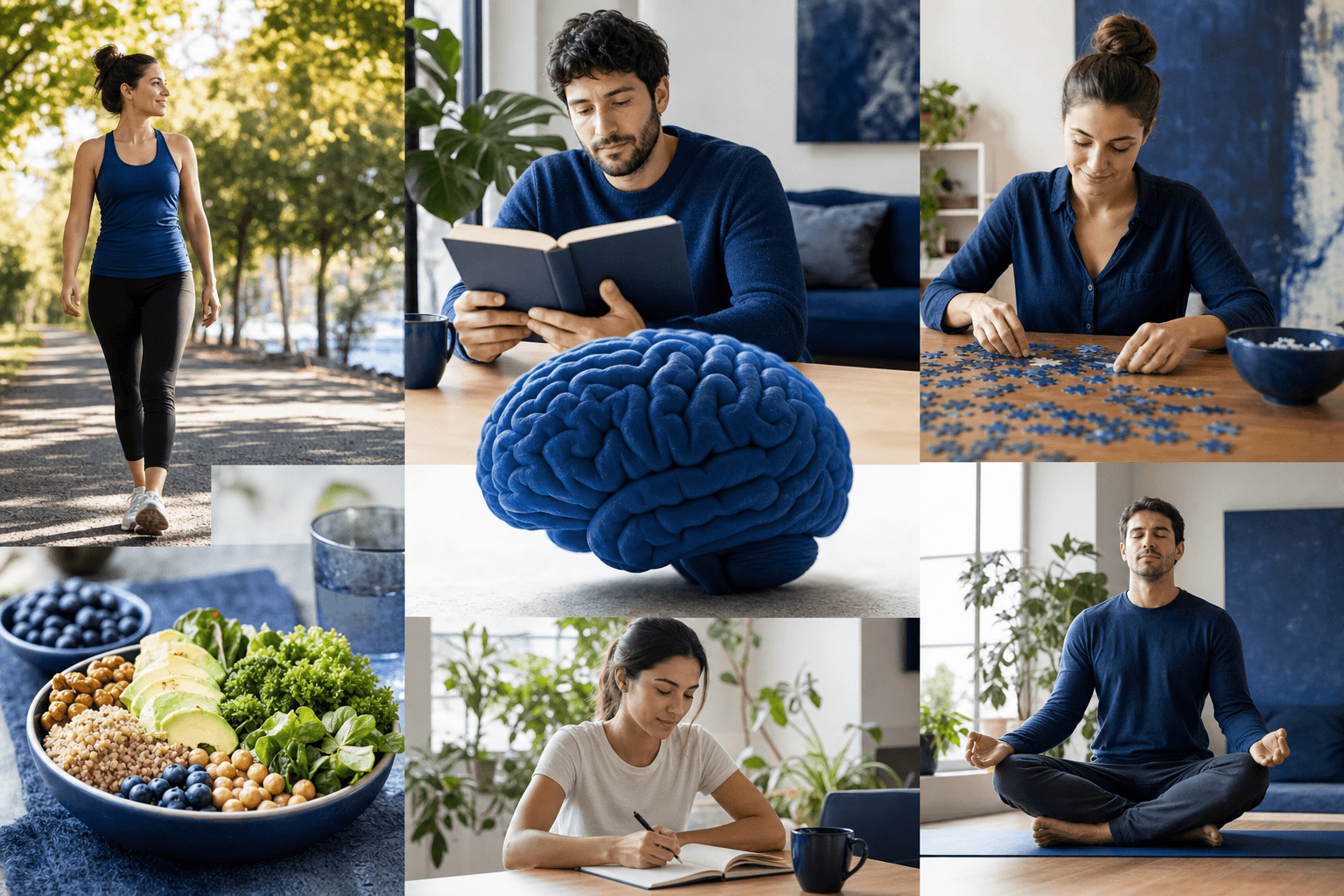
Cognitive challenge works best on a brain that is otherwise cared for. Physical exercise, quality sleep, decent nutrition and rich social contact each have evidence for supporting cognition that is at least as strong as any puzzle, and they multiply the value of mental effort rather than competing with it. A crossword done on four hours of sleep is a losing trade. In practice, the strongest brain training session available to most people is a brisk walk with a friend while holding a real conversation, followed by a proper night's sleep.
Social engagement deserves emphasis because it is invisible as training. Conversation forces you to retrieve words, track intentions, read tone and improvise. Board game evenings, community groups, volunteering and lively family lunches are cognitive gyms disguised as ordinary life.
A sensible weekly recipe
If you want a concrete structure, try this shape:
- One skill you are actively learning, practised three or more times a week, hard enough to be slightly frustrating.
- Regular games or puzzles you enjoy, valued honestly as enjoyment.
- Daily movement and guarded sleep, the platform everything else stands on.
- Deliberate social contact several times a week, especially after retirement, when it stops happening automatically.
Rotate the skill every year or two. Once fluency arrives, novelty, and most of the benefit, has moved elsewhere.
A final note of care: brain training, however good, is not a treatment for memory problems. If you or a family member notice persistent changes in memory, language or judgement that interfere with daily life, the right move is a medical assessment, not a harder puzzle. For everyone else, the message is liberating: skip the subscription if you like, and spend the effort on a real skill, real people and a real walk. Your brain will take that deal every time.
The habits that protect your heart protect your brain too. Explore the wider Healthspan health ecosystem.